Page Index

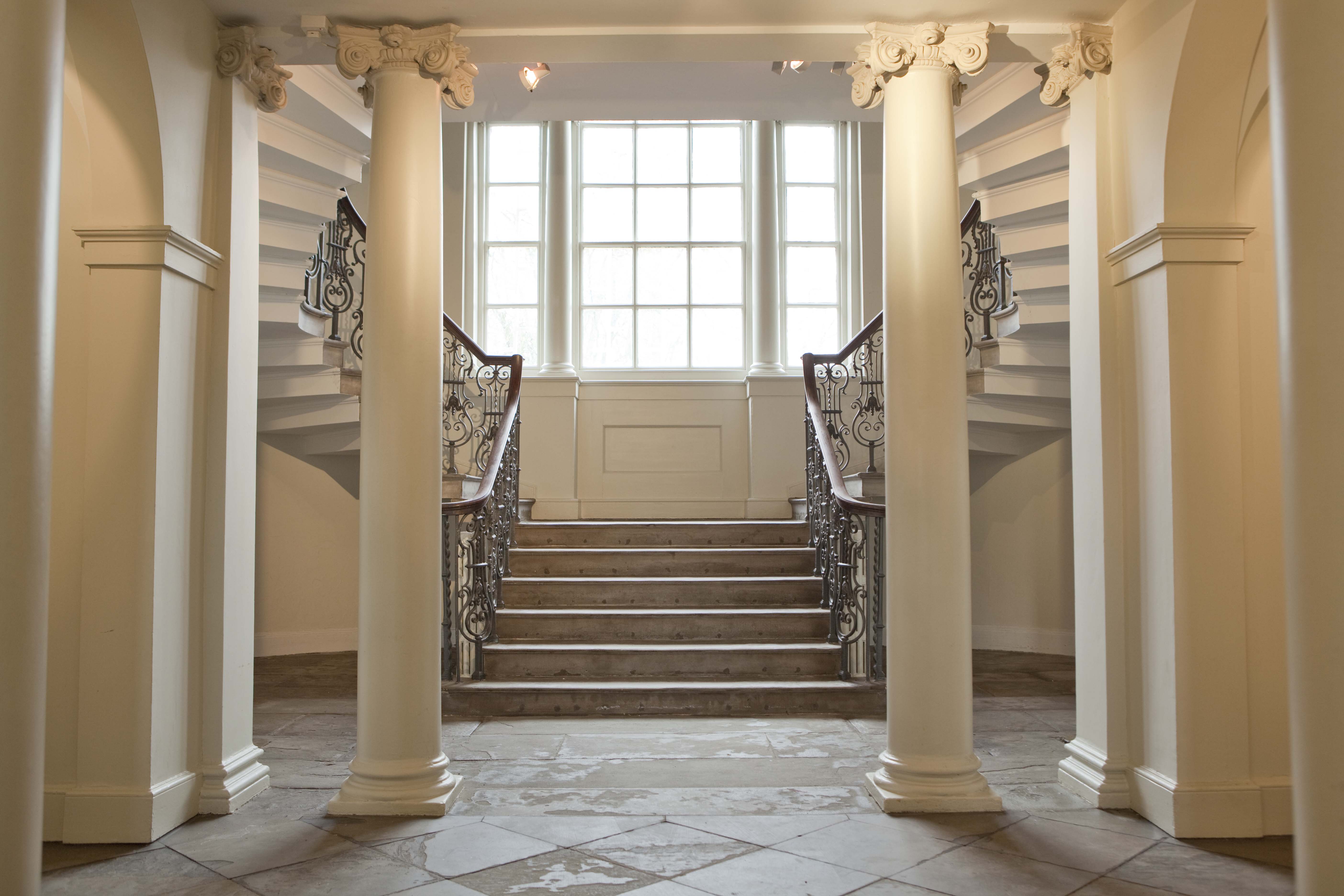
Platt Hall is being re-developed as a centre for Creative Health in Platt Fields Park, in the city of Manchester, England. It operates in an eighteenth-century Georgian-style building that was well-known for 70 years until 2017 as the Gallery of Costume and is part of Manchester City Galleries. The gallery held one of the largest apparel collections in England, introducing changes in fashion going back several centuries.
As the building aged, however, the gallery was closed in 2017. Renovations were begun, the costume collection is being relocated to Queens Park store and conservation studios in the district of Harpurhey in the northern part of Manchester. Platt Hall began the process of developing a new identity.
—What kind of place would Platt Hall be from then on?
—What needed to be done to make Platt Hall a “good neighbour” in this district?
For this interview, we asked Ruth Edson and Arthur Simons, who have grappled with these questions, to talk about Platt Hall’s mottoes: “motivating people to manage their health through group activities” and “communication among people through objects.”

Ruth is the Senior Learning Manager for Adults and Communities across Platt Hall and Manchester at Gallery. Ruth has extensive experience of co-designing programmes in partnership with communities, artists, health partners, charities, and academics within gallery and museum settings. She is passionate about placing museums and galleries at the heart of solutions that offer creativity as a means of generating societal change.

Arthur is the Health and Wellbeing Coach across Platt Hall and Better Health MCR. Arthur’s role supports people to manage their own health through group activities and individual support. The programme helps patients set their own wellbeing goals through 1-1 coaching, provides a range of creative activities across Platt Hall and the local Robert Darbishire GP Practice, and supports people to engage with wider activities in the neighbourhood.
Well-being Initiatives of Platt Hall
I first learned about Platt Hall through a forum co-sponsored by Japan’s National Center for Art Research and Tokyo University of the Arts, “Art, Health and Wellbeing: Enhancing Wellbeing with Museums,” in October 2023. Ruth Edson, who presented as part of the programme, introduced her efforts to encourage dialogue through objects, which are called “Collections Chats.”
Platt Hall houses collections of a wide variety of artworks and objects, including dress and textiles, homecrafts and handcrafts, domestic and childhood objects, and archives relating to the history of the Hall. At the time of the renovations, beginning in 2019, Ruth began to explore ways to make use of such items in the context of local society, conducting exchanges with multiple groups and individuals.
Among those exchanges, and just prior to the lockdowns of the COVID-19 pandemic, Ruth made the acquaintance of a general practitioner (GP) at the Robert Darbishire Practice. Soon after that, the lockdowns began, so at first via Zoom, discussions began on the question “How can Platt Hall support and benefit people?”
“Collections Chats” grew out of those discussions. It began online in May 2020 with the cooperation of the Robert Darbishire Practice as a means of mitigating the isolation people felt under the lockdowns. Ruth described them as follows: “We had a big piece of paper and we mapped out the health priorities for the area, which were obesity, diabetes, mental health, and young people’s health.”
The chats were held online weekly on Thursday mornings during the pandemic. Later, as restrictions on group gatherings were eased, the online discussions shifted to in-person meetings at Platt Hall. Those led to the development of our current “healthy lifestyles” activities.
Objects as “Another Person”
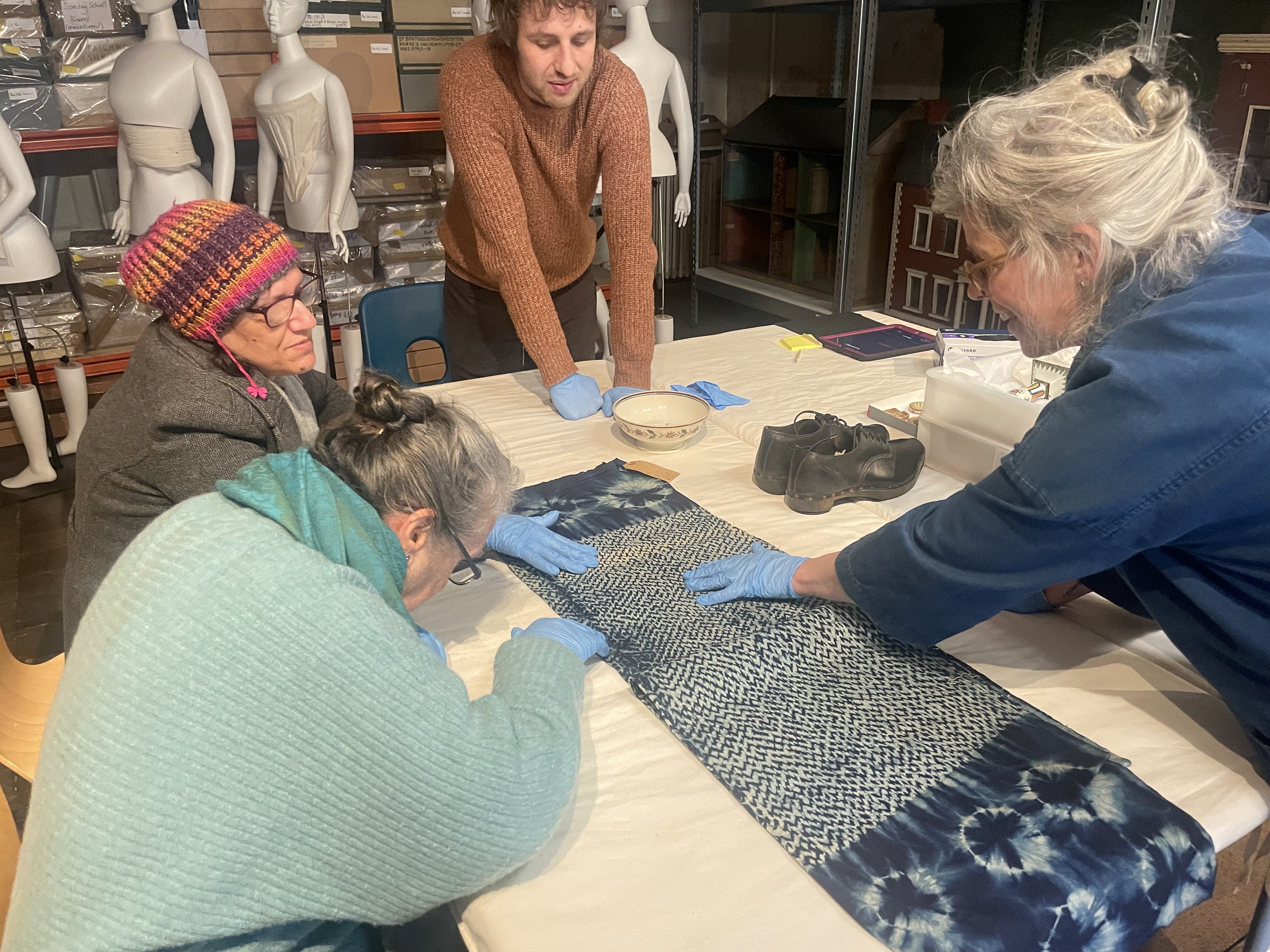
In the “Collections Chats” participants begin with items from the Platt Hall Collection, sharing their observations, memories, and experiences in small groups. I was impressed by Ruth’s comment about the difference between people talking together face to face versus talking through discussion of such objects.
“I often see the object as another sort of person in the room. I might ask about difficulties relating to losing weight, and participants might struggle to answer. But if they’re talking about an object, people just start sharing funny stories. Conversation begins naturally as they’re wondering what the object is. There is a sense that they are all learning something together.”
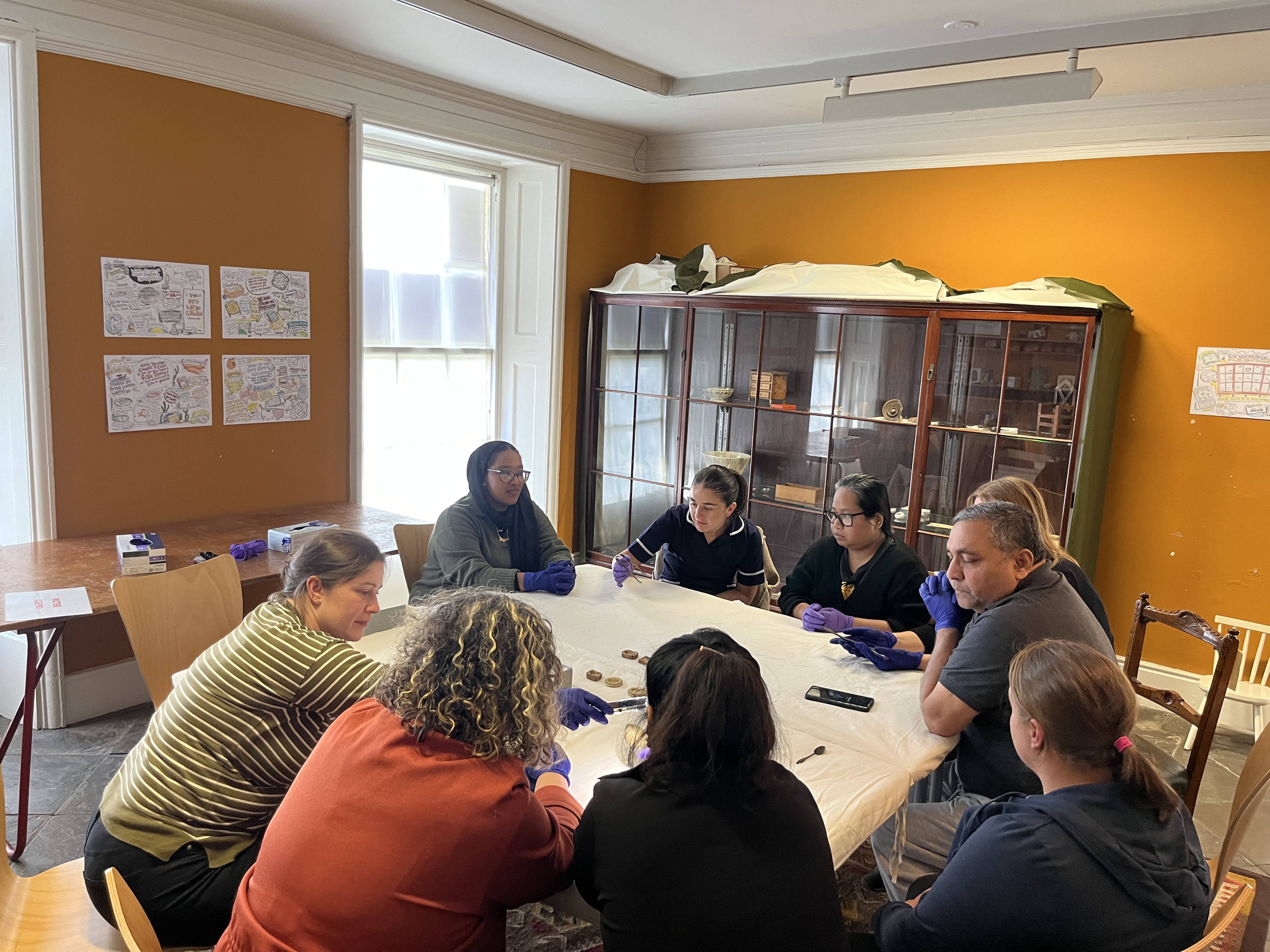
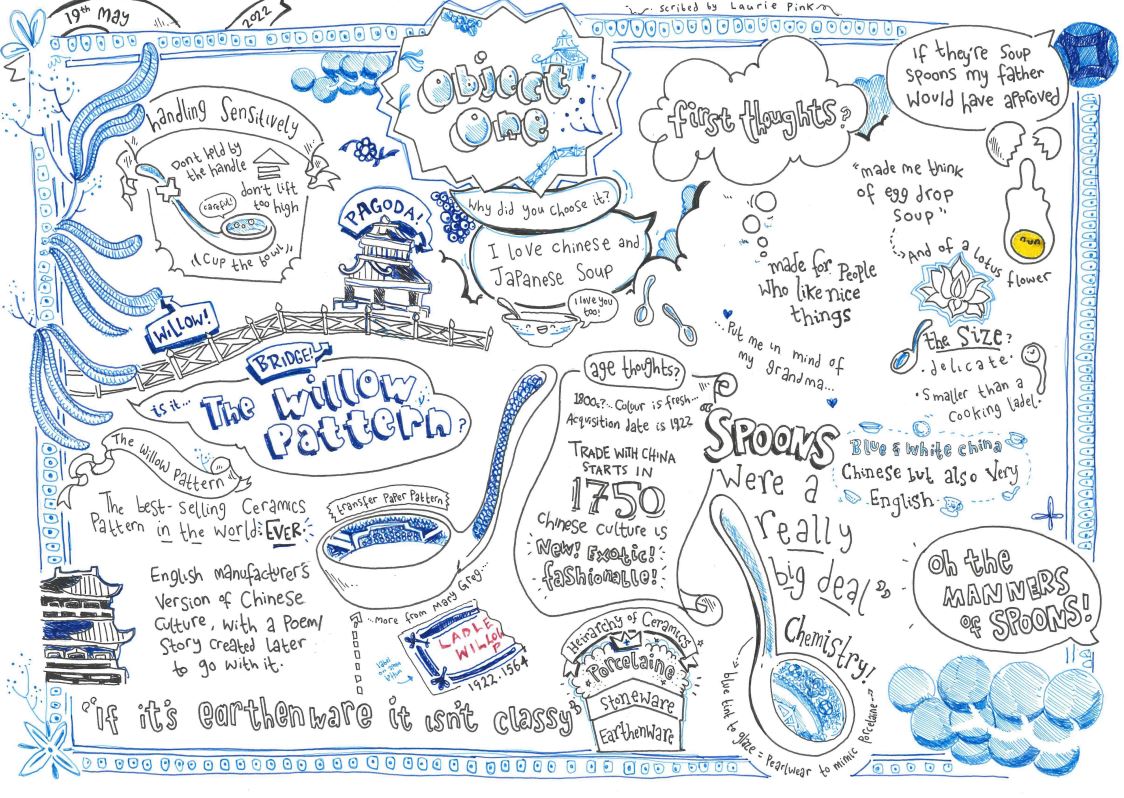
At Platt Hall, in this “conversation via objects” as incorporated into the current “healthy lifestyles” programme, no explanation is given of the items set out in front of participants. If the objects were identified and their uses explained from the outset, participants would simply listen, and the experience would be completely passive. When the sessions were held online, photographs of the objects were shown during the discussion, but now actual objects are used.
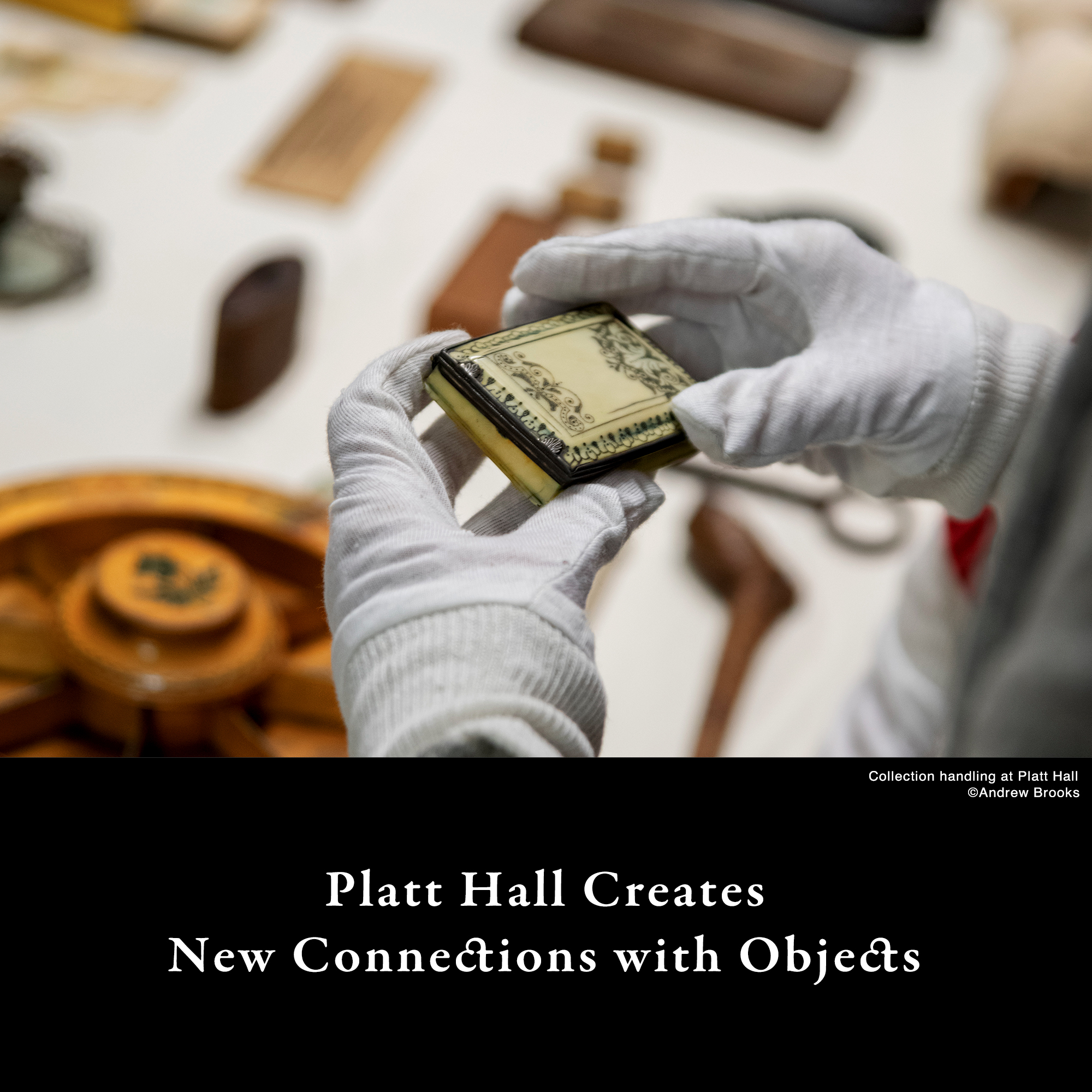
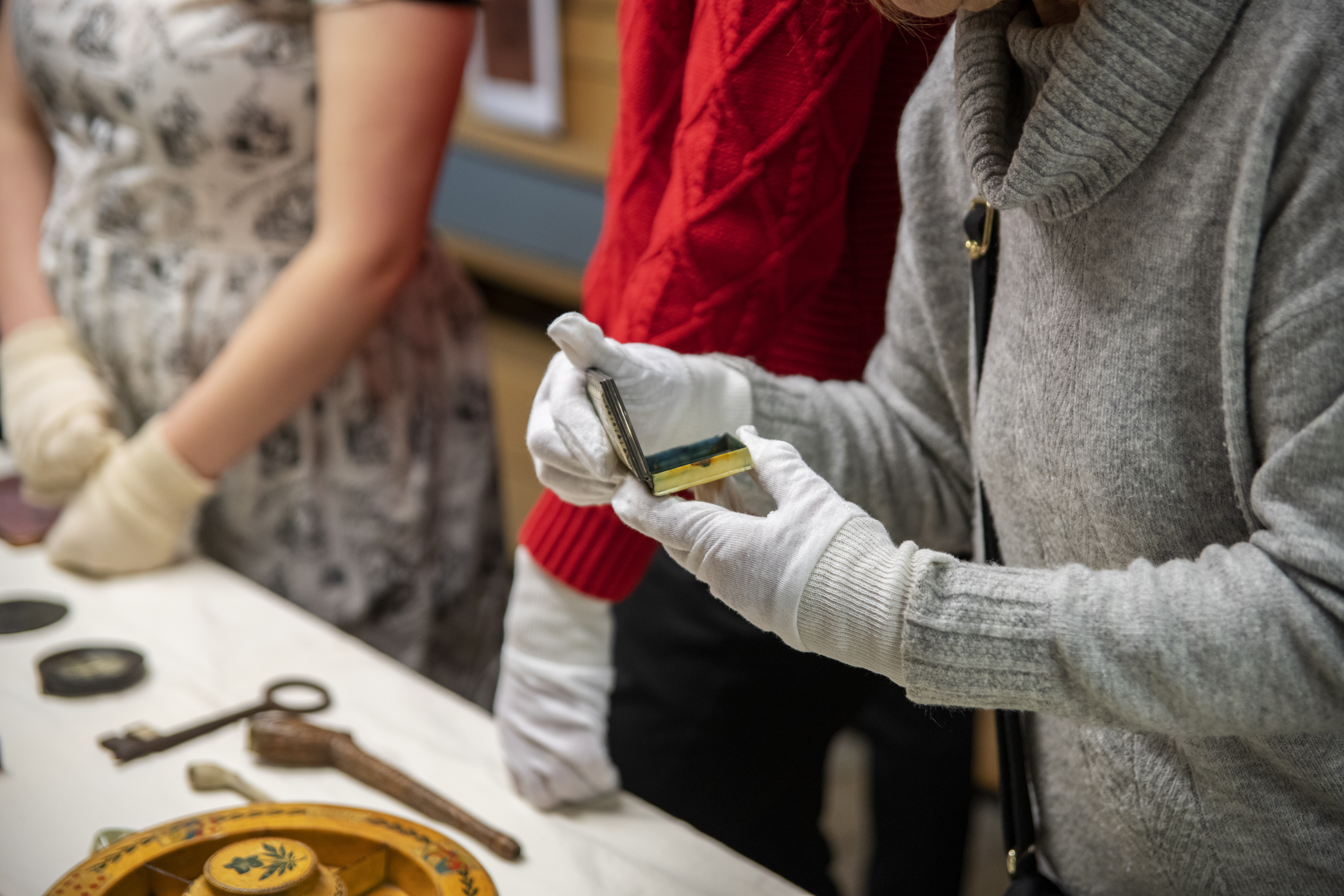
Regarding the handling of the objects, basics guidelines for handling collection objects are shared and participants handle each object and pass it around following those rules.
Ruth says, “We always show where the vulnerable points are for an object. Say, for example, it’s a ladle—a ceramic ladle. Then we’d say to hold it by the both bottom of the ladle and the base of the handle.” She said that when there are objects that are too fragile to handle, they place them in the centre of the table where everyone can easily see them.
As we can tell from Ruth’s account, how to take good care of objects is another concern of the programme.
The number of participants is approximately ten per session. The faciliator and participants ask various questions, starting with “Who made this?” “Why was it made?” and continuing to “What period was it made in and what materials is it made from?” “What kinds of people would have used this?,” in the natural course of the conversation further broadening and deepening the questions.
As people deepen their relationship with objects, they develop empathy for people and events of the past. As the people of the group get to know one another, the dynamic and connections of the group lead to a sense of wellbeing.
An Approach to Health Beginning with a Museum
The “Healthy Lifestyles” programme at Platt Hall currently underway emerged out of ongoing dialogue with the Director of Better Health MCR, who manage Robert Darbishire Practice to find a way to utilize museum objects to promote people’s health.
At the time of the pandemic, the number of people diagnosed with diabetes sharply increased. The first programme—driven by the clinic’s commitment to preventative care—focused on the theme of prediabetic conditions. Obesity is a major issue in the U.K. today and yet there are almost no services specializing in obesity. Arthur comments, “There have been external weight-management programmes for some time, but they have really long waiting lists, so people were just waiting for treatment. . .. There are injections that some people are taking, but they are available only privately. Weight management is a problem shared by many of the patients I meet, but there is little that a general practitioner can do about it.”
To support people under these conditions, Ruth and Arthur’s activities do not stop simply at health programmes but extend to comprehensive support taking advantage of local connections. As Arthur says: “This programme is about bringing people together to connect with each other and give them a space to start thinking. It gives them the space to think about their own health and feel seen and heard, and to connect with other people who are going through a similar thing . . . . It’s not meant to be a strict or controlled programme. Rather, it is like a start for their journey to get back to health, to caring about themselves, and providing an opportunity to engage with society.”
The sessions are held once a week over a period of six weeks on themes such as “food and nutrition” or “exercise,” with clinic staff, artists or other facilitators contributing to each session’s theme. Through talks by clinical nursing staff and exercises supervised by a physical therapist, the goal is to help participants gain the knowledge and confidence they need to manage their own health.
The programme also features group cooking led by chefs and workshops led by artists in such arts as creating pottery bowls or booklets. These activities show participants how they can enjoy learning and creatively face the maintenance of their own health.
Memory and Dialogue Opened up by Objects
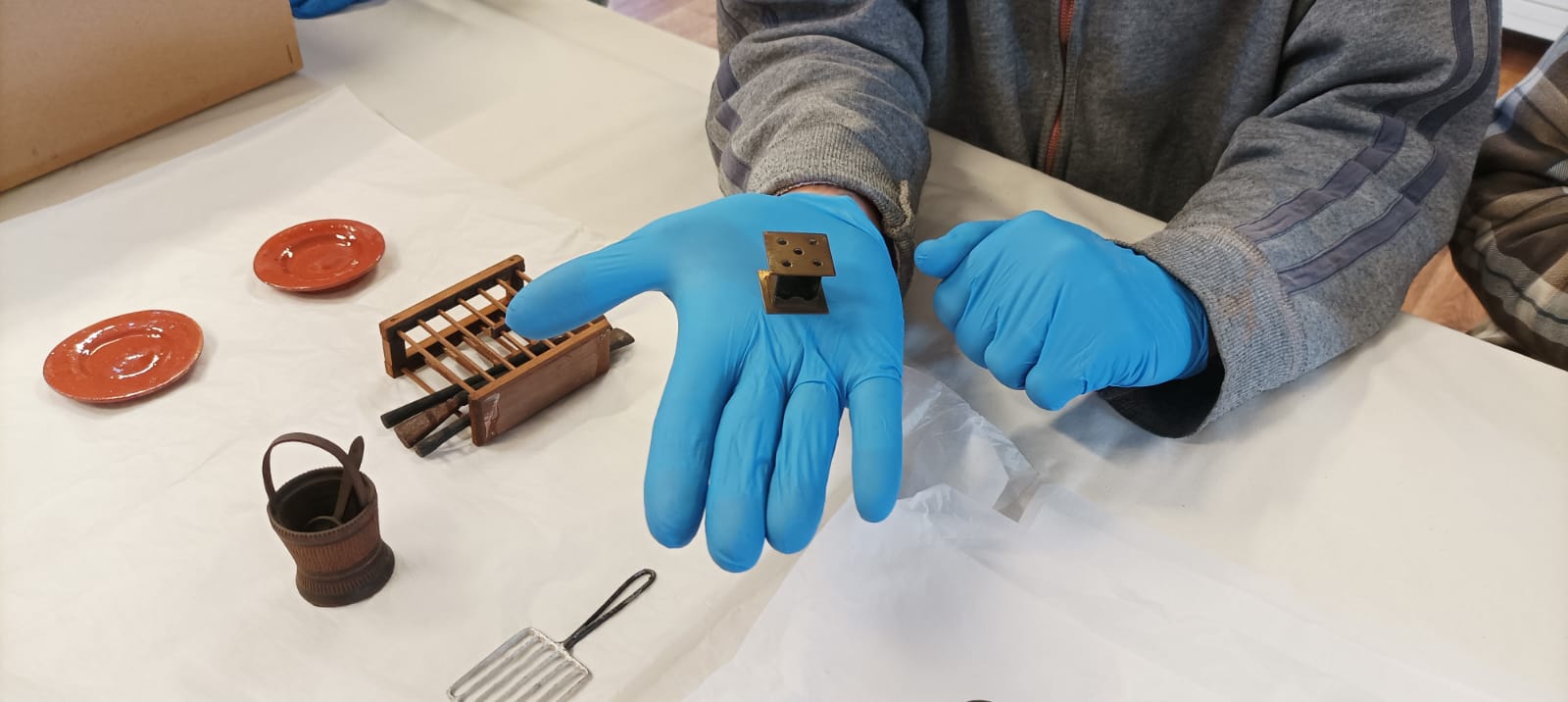
For each of the sessions three or four relevant objects, which have been condition checked in advance, were selected. For example, for the session of “Food and Nutrition,” the talk begins with a set of sugar tongs and spoons and an eighteenth-century biscuit cutter. Participants are asked to choose among the items themselves in order to elicit interest and initiative. Interesting conversations unfold around the objects, some of which are familiar and others puzzling, prompting questions like, “I wonder what this was used for?” Someone will share their knowledge of “how sugar a couple of hundred years ago was a rare delicacy, more for wealthy people.” And that would lead to the observation of how different sugar consumption is today. To illustrate how the conversation would flow, Arthur related how the talk might turn to “how cheaper foods are packed with more processed sugar, and how that makes it really challenging to cut sugar out of the diet. That, in turn, leads to talk about how times have changed.”
In the course of such a conversation prompted by objects, Arthur observed, the participants gradually start to build relationships among themselves. Ruth agreed: “The objects really do provide a presence in the room and remind us of what it means to be human. Everyone has used a spoon and we can recognize a spoon, and we often have an experience or a story to shared based on recognition of such an object.”
Regarding how the presence of objects relates to self-recognition and experience-forming, Arthur shared an episode from one of the sessions that left a lasting impression on him: “In the session about exercise, one of the objects we had selected was a tennis racket from the 1950s. One woman began to talk about playing tennis when she was young. I realised that, as she held the racquet in her hands, her expression and demeanour had clearly changed. Reminiscing about experiences from her youth, she became quite animated, and she seemed to be thinking ‘Why don’t I play tennis now?’ Through the object, the session gave her the opportunity to remember her feelings and consider her thoughts. “
Arthur says that objects can arouse memories, names of forgotten places, and even sense of belonging; in that sense he feels experiences like those in the sessions can support people’s wellbeing and help them think about things clearly.
For people who feel isolated or lack connections to society, time to reminisce about one’s youth and share stories about events from one’s life can be a vital source of emotional support. Arthur emphasizes the significance of sharing: “the important thing is not to just reminisce, but to tell stories and hear others’ stories, sharing from each other’s lives.”
He also says, “Sometimes the challenges we face are quite difficult to grasp. This programme helps participants come to terms with their situation. It’s about rediscovering healthier habits together with others. That is the aim of the health coaching approach.
We believe people are their own best resource. They have the answers to their own questions; they just need a little bit of guidance and a little bit of focus. Hopefully looking at the objects in the sessions can help them with this effort.”
The Museum as a Place to Belong
The Manchester Art Gallery and Platt Hall are operated under the jurisdiction of Manchester City Council, which organizes activities under a ten-year strategy from 2025 to 2035 guided by the city’s shared objectives centred on the people, the place, and economic growth.
Manchester City Galleries contribute to all three of these, and people’s health and wellbeing, is at the core of Platt Hall’s purpose and identity. Ruth says that “what can be gained from these activities is not one-way, with the museum offering something to the locale.”
“The strength of running this kind of partnership is huge for us as well. It brings people into Platt Hall who wouldn’t have come at all, who would not ordinarily visit an art gallery or a museum. And looking at the objects together with local people helps us as staff to better understand the objects and the meaning they hold.”
Platt Hall is located in a district with a very diverse population where more than 100 languages are spoken, and people from all sorts of backgrounds participate in its programmes. Arthur describes the programmes as “starting points,” mentioning the various strategies and opportunities incorporated into them that are designed to help participants carry over what they have learned in the course once it is finished.
“After the six-week programme, we invite participants back three months later for a check-in session. And there are ongoing programmes here that we encourage people to attend if they want to, throughout the year. For example, there’s a walking group every Monday. This includes creative activities, visits to other places of interests across the city and on the walks, we bring along images of objects in the collection as conversation starters. Then there’s the gardening project, which is Tuesdays, at the volunteer-run garden here at Platt Hall and also at Robert Darbishire. We also have workshops for engaging in enjoyable creative activities. They’re led by artists in different genres.”
Providing a place where participants feel at home and where they can maintain the ties they form in our programmes is good for Platt Hall as well. Ruth explains:
“The Platt Hall collection is quite eclectic and often the provenance and dating of the items collected is not well known. Most of it was collected more than 100 years ago, and records don’t exist for some items. That makes the questions people ask about the pieces, like “What was this for?” “How does it relate to today’s society?,” of even greater importance.
Different people have different levels of knowledge, but some will look things up and then share their findings. We think working with people like that is really beneficial to the life of Platt Hall as a museum as well.”
Sharing, Not Showing the Collection
In medical contexts, everything usually centres around “solving the problem,” but this programme focuses on enriching the quality of daily life.
”We want to make use of Platt Hall itself, the building and the collection, to enhance people’s wellbeing. After all, this place is part of the heritage of the people of this district; it’s part of their lives. It’s important that the collection is connected to today’s daily life. We want it to be part of people’s everyday life, not hidden away in boxes.”
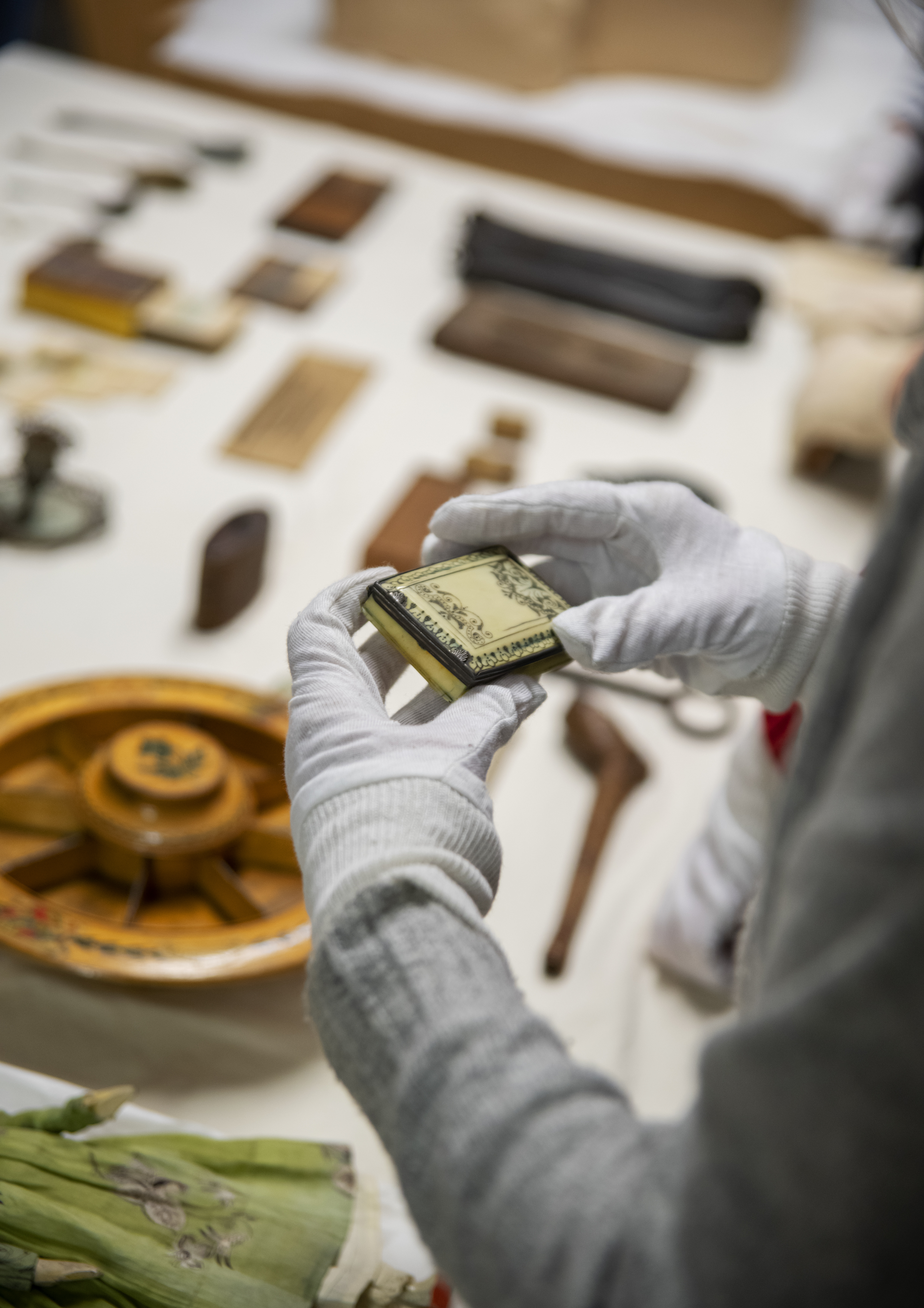
Regarding the handling of objects at Platt Hall from now on, plans are to make the collection available to participants as much as possible without shutting them away in glass cases, but sharing them in more creative ways that allow items to be touched. Platt Hall has conducted a survey about the difference between actually touching objects and simply viewing them. Ruth commented that she asked participants in the collection chats to evaluate the experience, and describes the response of many as saying: “. . . there is a massive difference in being able to touch the objects and know what they feel like. When you see something behind glass, it feels distant and detached from you. Being able to touch something allows one to understand it more deeply. It also helps establish connections with others through conversation. Building close direct connections with objects is important.”
Arthur and Ruth explained how, in the course of staff discussions, the key words “sharing, not showing” emerged. The idea here is that they do not present items of the collection as “we’ll show you pieces from our collection,” but rather to emphasize the sharing of the items. I believe this approach expresses the relationship between Platt Hall and the locale.
Historically, the Manchester City Galleries had a system for loaning out paintings which continued until the 1980s. Leeds Art Gallery also has a loan system that continues today. People can apply to borrow paintings on a monthly or yearly basis and place the works in their homes.
The Victoria and Albert Museum in London has a similar programme to show items from its collection, newly launched in May 2025, called “Order an Object.” Visitors can request a specific work they will be allowed to see up close and touch.
Caring for People, Caring for Objects
As these examples show, museum works and documents have become more familiar and even touchable through such programmes, and yet there is always a dilemma between preserving objects in good condition and putting them to actual use to show people. In order to address that dilemma, Platt Hall has guidelines on the handling of objects compiled with the galleries conservation team, and conducts on-going monitoring of their condition and their risk management.
“One person’s way of handling an object is very different from the next person’s, and it can be related to their personality. It extends to the way people handle their own possessions. Some people are less confident than others, so it is up to us to set up an environment that is as safe as possible for the objects.
The same thing goes for the way we handle people. At the beginning of these sessions, we talk about what we need to make this space safe for everybody. It’s not just about keeping the objects safe; it’s also about keeping ourselves mentally well.”
Ruth says, “At the beginning of each session we remind everyone of the importance of respecting each other and being mindful of the differences of culture and the environment in which they have been raised.” She is keen to establish a tone for the gathering in which participants can feel safe in the time they spend together.
Efforts are also made to create an environment in which participants can speak up without hesitation whenever they feel uncomfortable or out of place. I was told that members of the Platt Hall team received training in “trauma-informed practice,” and that they take great care to enable participants to speak openly, so that no one is left feeling hurt. Ruth says, “Taking care of people and taking care of objects—both are of the same importance. When we come to actually handling the objects, what is particularly memorable for me is the moment a participant starts to talk about their life. When participants look back over their past lives or experiences and talk about incidents that took place, they connect with others. That “storytelling” is extremely important.”
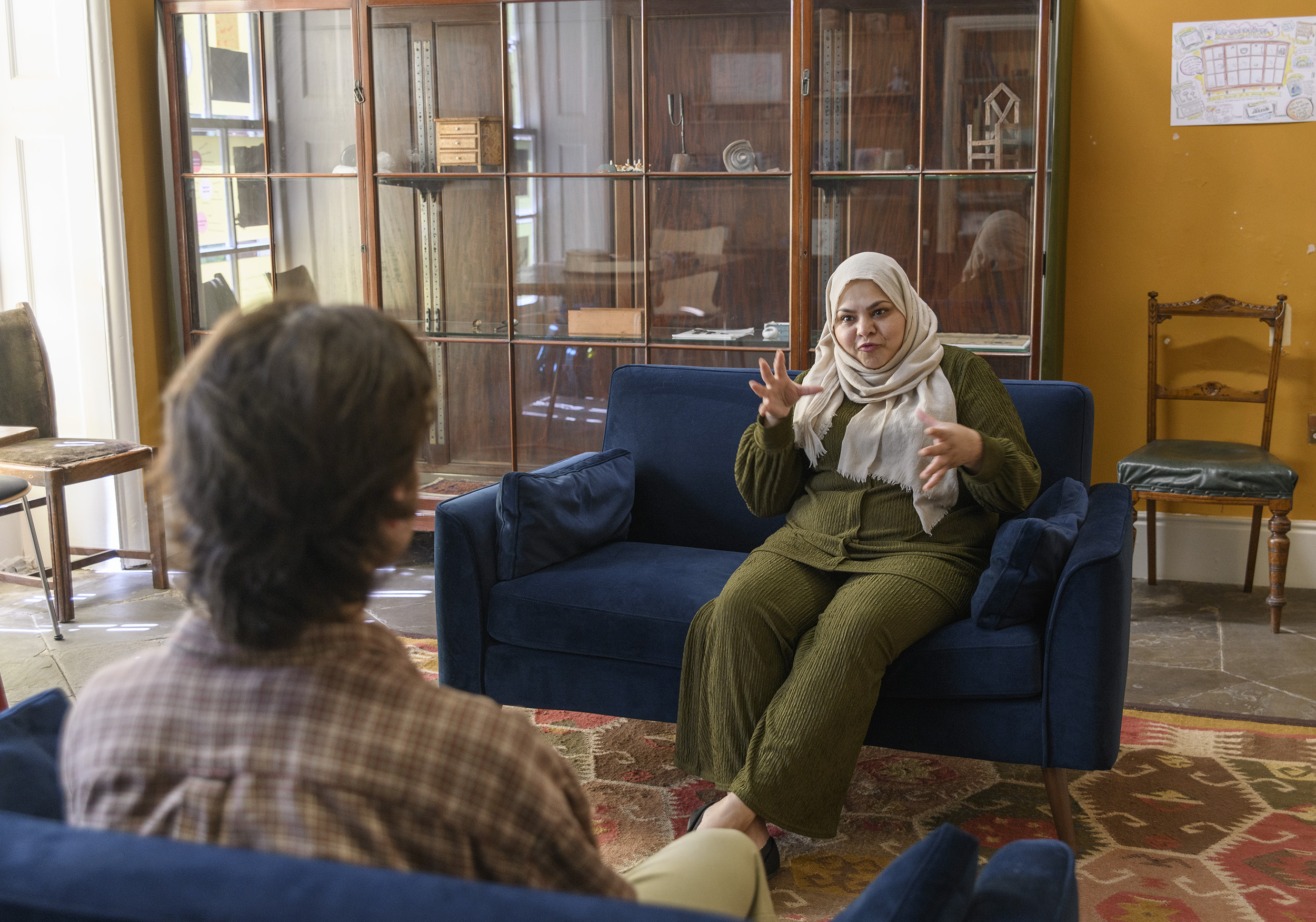
For a place to become a locus of belonging, it may be necessary for that place to become wrapped up with our own memories and the memories of objects within it. As I listened to Ruth and Arthur speak during the interview, I could tell that their commitment to empathy, understanding, and sharing undergirded the entire programme.
The history and memories embodied in the museum objects can come to life as active “participants” in dialogue, and through that dialogue, they can contribute to the wellbeing of people of the community. Rather than simply displaying objects in glass cases, sharing them together with people’s own memories is an approach that could generate renewed energy to sustain our present lives.
Cooperation
Platt Hall Rusholme,
Manchester, M14 5LL, UK